Leave Your Message

Top China Aluminum Frame Section Profile Supplier?

Choosing a Top China Aluminum Frame Section Profile supplier requires more than comparing catalog prices. It demands evidence, process knowledge, and careful verification.

The International Aluminium Institute reported global primary aluminium production above 70 million tonnes in 2023. China remained the largest producing country, supported by extensive extrusion capacity and a broad manufacturing base. This scale creates opportunity, but it does not guarantee consistent profiles. A reliable supplier should explain alloy selection, billet sourcing, extrusion temperatures, die maintenance, and dimensional controls. For common structural applications, 6063-T5 may provide a balanced finish and machinability. 6061-T6 may offer higher strength where engineering loads are more demanding. The correct choice depends on the frame design, not marketing language.

Look for documented compliance with standards such as ASTM B221 or EN 755. Request inspection records for wall thickness, straightness, surface quality, and temper condition. ISO 9001 certification can support process control, although certification alone proves little about daily performance. The International Energy Agency identifies aluminium as an energy-intensive material, making recycled content and electricity sourcing increasingly relevant purchasing factors. Ask for mill test certificates, recycled-content evidence, and batch traceability. Small details matter.

No supplier is perfect. A polished website cannot replace samples, independent testing, and production audits. Some quotations appear attractive until tooling, packaging, anodizing, and inland transport are added. That assumption deserves scrutiny. The strongest supplier combines measurable quality, realistic lead times, transparent communication, and practical experience with international shipping. This guide examines those criteria and identifies how buyers can compare Chinese manufacturers more confidently, while recognizing that price remains only one part of total value.
Top China Aluminum Frame Section Profile Supplier?

What Defines a Top China Aluminum Frame Section Profile Supplier?

What Defines a Top China Aluminum Frame Section Profile Supplier?

China’s scale matters, but volume alone does not prove supplier quality. The USGS Mineral Commodity Summaries 2024 estimated China’s 2023 primary aluminum output at about 41 million metric tons, nearly 59% of global production. This capacity can support competitive pricing and stable material access. However, a capable supplier must control alloy chemistry, extrusion tolerances, straightness, and surface finish.

A practical audit should examine mill certificates, batch identification, and spectrometer records. Request samples cut from actual production billets, not showroom pieces. Measure wall thickness with calibrated tools. Check corner radii, twist, and length tolerance against agreed standards, such as EN 755-9 or ASTM B221.

For architectural frames, coating thickness, color variation, adhesion, and corrosion testing also deserve written records. ISO 9001 certification helps, but it cannot replace process evidence.

Delivery reliability is equally important. The World Bank’s Commodity Markets Outlook has repeatedly shown that aluminum prices can shift sharply with energy and supply conditions. A responsible supplier explains surcharge formulas, production capacity, mold ownership, packaging, and corrective-action procedures. Ask how rejected profiles are isolated and reported. A low quotation may look attractive. It may also conceal thinner walls or weaker inspection. No supplier is flawless; even experienced factories can miss a dimension. The difference appears in traceability, response speed, and whether the supplier openly investigates the mistake.
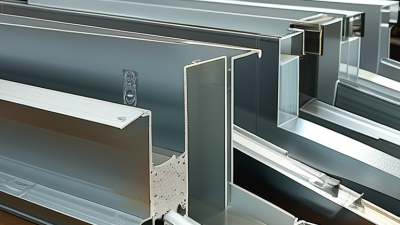
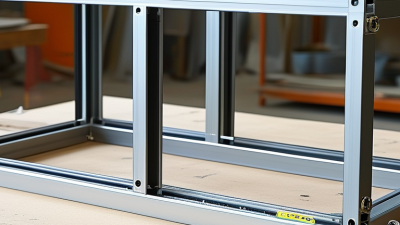
How Aluminum Frame Section Profiles Are Designed and Manufactured

Designing an aluminum frame section profile starts with load paths, not appearance. Engineers define span, joint type, wind pressure, and allowable deflection. Finite-element analysis then tests wall thickness, corners, and screw zones. Thin walls reduce weight, but sharp transitions can create stress concentrations. Extrusion dies must balance metal flow with dimensional accuracy. Small details matter.

According to the International Aluminium Institute, recycled aluminum uses about 5% of the energy required for primary aluminum. That figure supports billet selection, but recycled content still needs chemical and mechanical verification.

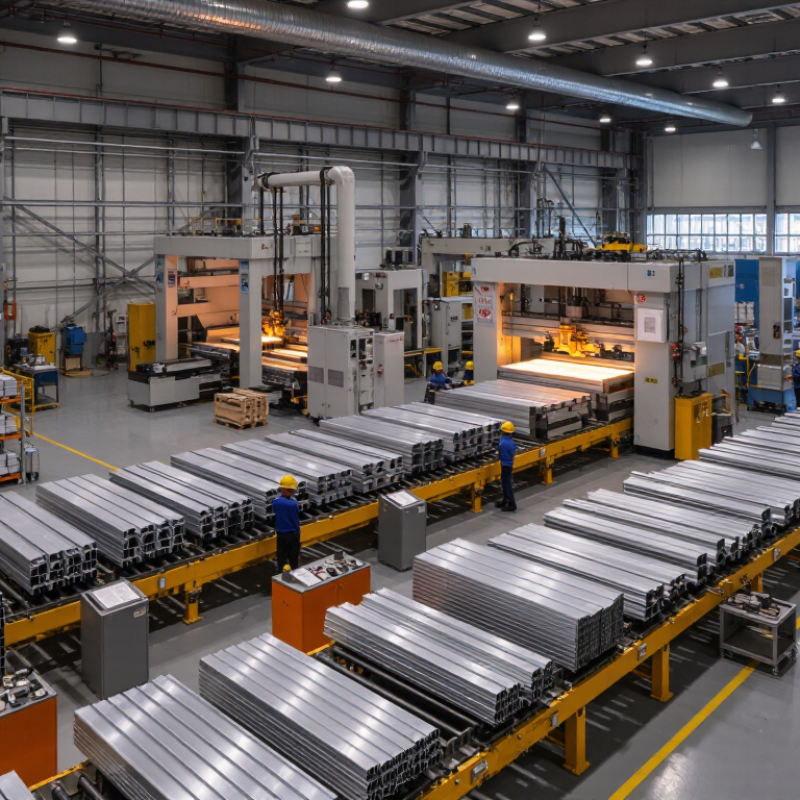
Manufacturing usually includes billet heating, extrusion, quenching, stretching, cutting, and aging. Operators monitor exit temperature and profile speed because both influence strength and straightness. Surface treatment follows inspection. Anodizing can improve corrosion resistance, while powder coating adds color and another protective layer.

Dimensional checks use calibrated gauges, coordinate measurement, and sample assembly with actual fasteners.

International Aluminium Institute statistics reported global primary aluminum production above 70 million tonnes in 2023, showing the scale behind this supply chain.

For buyers comparing China-based suppliers, reliable documentation matters: alloy certificates, tolerance data, traceability, and repeatable trial samples.

No profile is perfect. Design reviews can miss assembly friction or a corner that collects water. Practical testing must challenge the drawing.

Which Materials, Standards, and Surface Treatments Matter?

Top China Aluminum Frame Section Profile Supplier?

When evaluating a China aluminum frame section profile supplier, material choice deserves more attention than catalog appearance. Aluminum 6063-T5 is common for clean extrusions and reliable machinability. Use 6061-T6 when higher structural strength matters. Do not guess. Request the alloy designation, temper, chemical report, and mechanical test results for each production batch. Small details matter. Wall thickness, corner radii, and straightness can change load performance and assembly fit.

Ask which standards control extrusion quality, dimensions, and testing. EN 755 covers mechanical properties and dimensional requirements, while EN 12020 suits precision architectural profiles. ASTM B221 may fit projects using North American specifications. The standard should match the destination market and application. More paperwork is not always better. Drawings should state tolerances, inspection points, and sampling methods clearly. Compare supplier samples with calibrated tools, not visual judgment alone. A certificate can look complete while missing the exact temper or batch number. That weakness is easy to miss.

Surface treatment affects both appearance and service life. Anodizing offers a durable oxide layer and a metallic finish, but color can vary between batches. Powder coating provides broader color choices, yet pretreatment and curing control are critical. Specify coating thickness, adhesion, color tolerance, and corrosion testing. Ask for a retained sample and treatment record. Lighting can mislead. A supplier may promise perfect color matching, although extrusion batches can vary. Discuss that limitation before tooling and mass production. Inspect cut ends, scratches, film coverage, and packing protection before shipment.

Top China Aluminum Frame Section Profile Supplier?

Which Materials, Standards, and Surface Treatments Matter?

Material

EN AW-6063 is widely used for architectural frames because it offers good extrudability, corrosion resistance, and surface appearance. EN AW-6061 is selected when higher mechanical strength is required.

Standards

Common references include EN 755 and EN 12020 for extruded profile requirements, ASTM B221 for aluminum extrusions, and AAMA 611 or AAMA 2603–2605 for finish performance.

Surface treatment

The chart shows typical dry-film or anodic-layer thickness ranges. Exact requirements depend on exposure, color, pretreatment, and the applicable project specification.

How to Evaluate Supplier Quality, Customization, and Production Capacity

Top China Aluminum Frame Section Profile Supplier?

Choosing a China aluminum profile supplier requires evidence, not attractive samples. The International Aluminium Institute reported global primary aluminum production above 70 million tonnes in 2023. This scale creates many options, but capacity does not guarantee stable quality. Request mill certificates, alloy composition, hardness results, and dimensional inspection records. Check whether testing follows standards such as GB/T 5237.1, EN 755, or ASTM B221. ISO’s 2023 Survey recorded more than 1.2 million ISO 9001 certificates worldwide. Certification helps, but it cannot replace a factory audit.

Customization deserves practical scrutiny. Ask for die-design drawings, extrusion tolerances, surface-finish limits, and minimum order quantities. A reliable supplier should explain how it controls warping, scratches, color variation, and cut-length errors. Request a pilot batch before approving mass production. Inspect profiles under normal warehouse lighting, not only polished photography. That detail matters. I have seen excellent samples hide inconsistent anodizing between production lots.

Production capacity must be measured in equipment and performance.

Review press tonnage, billet diameter, monthly output, aging ovens, machining lines, and packaging space. Compare promised delivery dates with recent on-time records. The China Nonferrous Metals Industry Association has repeatedly highlighted energy efficiency and processing consistency as industry priorities. Ask for traceable batch codes and corrective-action reports. A supplier may claim 5,000 tonnes monthly, yet lack enough finishing capacity. That is an easy mistake. A careful evaluation should include a factory visit, sample measurements, and a written response-time agreement.

What Industries Use China-Made Aluminum Frame Section Profiles?

What Industries Use China-Made Aluminum Frame Section Profiles?

China-made aluminum frame section profiles serve several demanding industries. Construction remains a major user, including curtain walls, modular buildings, windows, and interior partitions. The United Nations Environment Programme reported that buildings and construction consumed about 32% of global energy in 2022. Lightweight profiles help reduce structural loads, although thermal performance depends heavily on design and installation.

Electric mobility is another fast-growing field. The International Energy Agency recorded more than 14 million electric car sales worldwide in 2023. Manufacturers use extruded profiles for battery trays, equipment frames, charging stations, and lightweight vehicle structures.

Solar energy also creates steady demand. IEA PVPS reported over 400 GW of new photovoltaic capacity in 2023, supporting applications such as mounting rails, inverter cabinets, and maintenance platforms.

Industrial automation uses profiles for machine guards, conveyor frames, workstations, and clean production enclosures. China’s scale is significant: the U.S. Geological Survey estimated roughly 36 million metric tons of primary aluminum production there in 2023.

However, production volume does not guarantee consistent quality. In practical sourcing, I check alloy certificates, wall thickness, straightness, anodizing thickness, and corner fit. A sample can look excellent. A long batch may still show distortion. That risk deserves a second inspection plan.