Why Choose Aluminum Frame Section Profile?
Choosing the right structural material affects more than appearance. It influences assembly time, maintenance, safety, and long-term operating costs. The Aluminum Frame Section Profile has become a practical option for machine guards, workstations, display structures, and modular production lines. Its clean surfaces and lightweight design make installation easier, especially when teams must adjust equipment on a busy factory floor.
In practical workshops, installers often cut profiles on site, connect them with brackets, and reposition frames without welding. This flexibility can reduce downtime. Aluminum also resists corrosion in many indoor environments and supports anodized or powder-coated finishes. However, it is not a perfect choice for every application. Heavy loads, vibration, and outdoor exposure require careful engineering. The profile size alone does not guarantee stability.
Good design starts with real measurements. Engineers should review span length, load direction, joint strength, floor conditions, and expected service life. Manufacturer drawings, alloy information, tolerance data, and load tables provide useful evidence. Hands-on inspection also matters. A loose connector can cause movement, even when the profile appears strong.
Small details matter.
A reliable Aluminum Frame Section Profile system should fit its intended use, not merely look modern. Designers may need to compare material cost, machining requirements, fastener quality, and future expansion plans. Some projects reveal weaknesses only after assembly, which is why prototype testing remains valuable. The best decision combines technical documentation with field experience, honest risk assessment, and a clear understanding of how the frame will actually be used.
What Is an Aluminum Frame Section Profile?
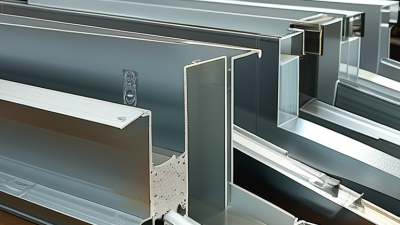
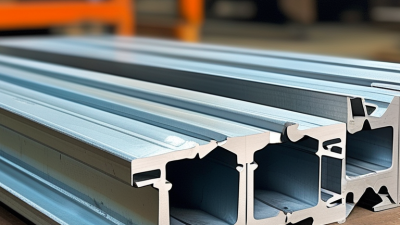
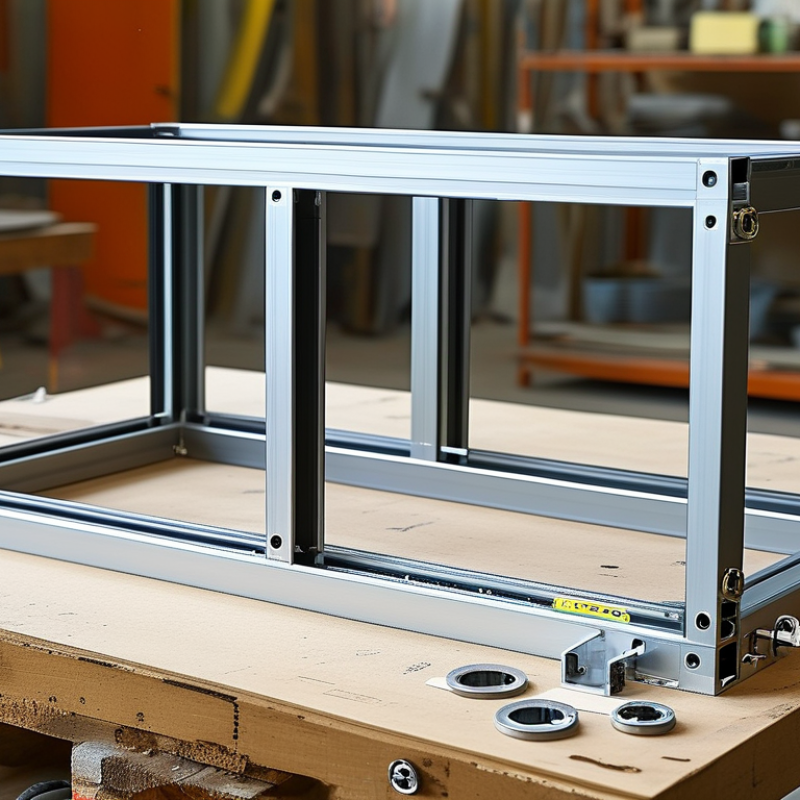
An aluminum frame section profile is a shaped aluminum component used to build frames, supports, and lightweight structures. It forms the structural outline of equipment, workstations, partitions, doors, and protective enclosures. Manufacturers create these profiles through an extrusion process, pushing heated aluminum through a precision-shaped die. The result is a long, consistent section with a fixed cross-sectional design. Common shapes include square, rectangular, T-slot, and custom profiles. Internal cavities reduce weight while maintaining useful strength.
Aluminum profiles are chosen because they combine low weight, corrosion resistance, and practical machinability. A technician can cut, drill, and connect them with suitable fasteners or brackets. Their smooth surfaces also support clean assembly and easier maintenance. However, aluminum is not automatically the best choice for every structure. Heavy loads, vibration, temperature changes, and connection design must be evaluated carefully. A profile may look strong but fail at a weak joint. That lesson is easy to overlook during quick installation.
Tips: Measure the required span and load before selecting a section. Check wall thickness, connection strength, and surface condition. Leave a small allowance for cutting errors. Perfect measurements are rare. Test one assembled corner before producing the full frame.
Why Choose an Aluminum Frame Section Profile?
What Is an Aluminum Frame Section Profile?
An aluminum frame section profile is an extruded aluminum shape engineered for applications such as machine frames, partitions, workstations, enclosures, and structural supports. Its hollow or multi-channel design provides practical stiffness while keeping material use and weight relatively low.
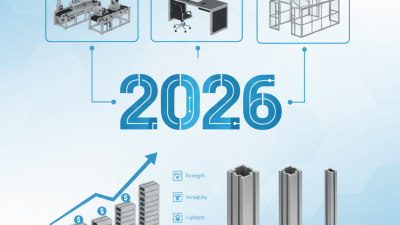
Why aluminum? Aluminum 6063, a commonly used extrusion alloy, has a density of approximately 2,700 kg/m³—about 66% lower than carbon steel. This makes aluminum profiles easier to handle and assemble, while their modular channels support fast connections, adjustment, and reuse. The actual performance depends on alloy, temper, profile geometry, and loading conditions.
Representative density values: aluminum 6063-T5, carbon steel, stainless steel 304, and rigid PVC. Values are typical engineering reference values and may vary by grade and composition.
How Its Structural Design Supports Performance
An aluminum frame section profile combines low weight with predictable structural behavior. Its hollow geometry places material away from the center, improving bending resistance without adding unnecessary mass. In workshop applications, this can mean easier handling and faster assembly. A 2.5-meter frame may be moved by one person, depending on its section size and wall thickness. That practical difference matters during repeated installation.
Performance depends on design, not aluminum alone. Engineers check span, load direction, joint spacing, and deflection before selecting a profile. T-slots, internal ribs, and reinforced corners can distribute forces across the frame. Proper fasteners also prevent local crushing around connection points. I have found that a rigid-looking frame can still shift when its joints are poorly tightened. Small details matter. Surface treatment helps resist corrosion and keeps the profile easier to clean. However, it cannot correct an undersized section or weak foundation.
The profile’s modular shape supports guarding, workstations, equipment supports, and lightweight enclosures. Components can be repositioned without cutting or welding, reducing downtime and material waste. This flexibility also invites mistakes. Too many unsupported spans may create vibration, even when the structure appears strong. Designers should verify allowable loads, connection strength, thermal movement, and safety factors. Aluminum expands more than steel with temperature changes, so long frames may need movement allowances. Reliable results come from calculations and real assembly checks, not appearance alone. A simple load test can reveal looseness before service begins.
How to Select the Right Profile for a Project
Why Choose Aluminum Frame Section Profile?
Choosing the right aluminum frame section profile starts with the project, not the catalogue. Define the load, span, height, and connection points first. A lightweight profile may suit a display frame, but a machine guard needs greater stiffness. Check wall thickness, moment of inertia, and allowable deflection. These details matter.
Consider the working environment carefully. Outdoor structures may need suitable surface protection, while workshops require resistance to dust, moisture, and repeated cleaning. Ask for alloy information, dimensional tolerances, test data, and material traceability. Reliable documentation supports safer decisions. For load-bearing applications, have the design reviewed by a qualified engineer. I have learned that a neat drawing can still hide a weak joint. Connection design deserves equal attention. Screws, brackets, and corner blocks must match the profile system and expected forces.
Tips: Make a simple prototype before ordering large quantities. Test one corner under realistic load. Measure movement, alignment, and assembly time. Also check whether tools can reach every fastener. A profile that looks efficient may become frustrating during installation. Leave room for adjustment. Real projects rarely stay perfect. Reconsider the selection if the frame needs excessive supports, unusual adapters, or frequent rework. Record each decision, including the reasons for rejecting alternatives. This creates a clearer technical trail for future maintenance.