Top Tips for Choosing the Right Aluminum Frame Section Profile?
Choosing the right Aluminum Frame Section Profile can be daunting. Experts emphasize the importance of understanding your specific needs. John Smith, a renowned engineer in this field, once stated, “Selecting the right profile is not just about aesthetics; it’s about functionality and performance.”
In an environment filled with various options, details matter greatly. Each profile serves a unique purpose, affecting the overall efficiency of your project. For example, a heavier profile may offer more strength, but it could complicate installation. Conversely, a lightweight option might save time but compromise durability.
When navigating this selection process, consider aspects like load-bearing capacity and environmental conditions. Engaging with industry professionals can provide invaluable insights. Not every profile fits every project. A solution that works for one application may not be suitable for another. Being aware of these nuances is essential for making informed decisions.

Understanding Aluminum Frame Sections: Types and Applications
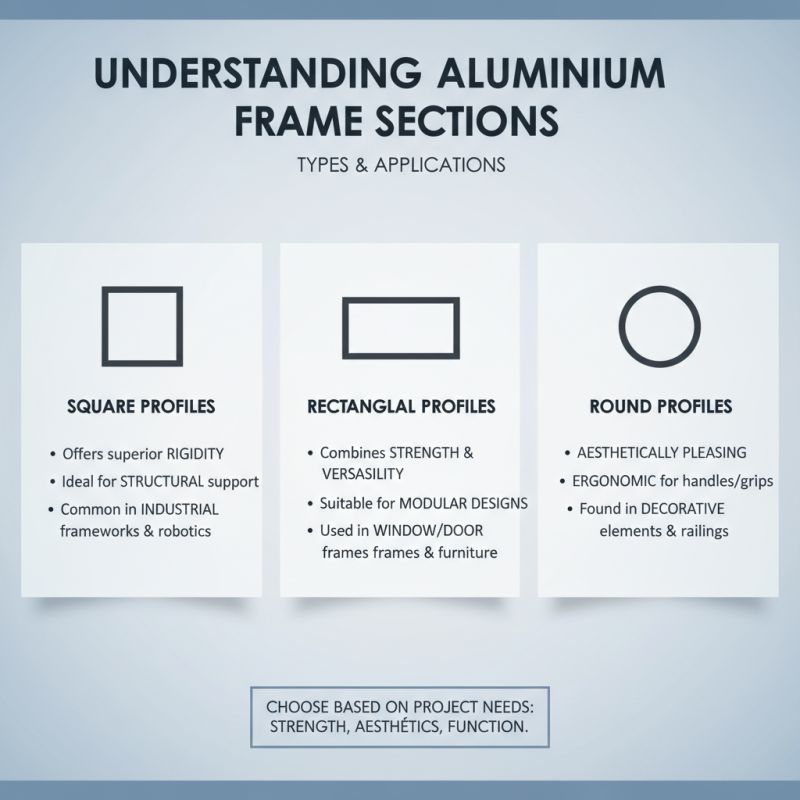
When selecting aluminum frame sections, understanding their types and applications is crucial. Aluminum frames come in various shapes, including square, rectangular, and round profiles. Each shape has distinct advantages depending on the project requirements. For instance, square sections often offer better rigidity, while round profiles can be more aesthetically pleasing in certain designs.
Different applications can dictate which frame section to choose. For structural purposes, heavier sections provide the necessary support. In contrast, lighter profiles are suitable for applications where weight is a concern, such as in portable exhibitions. Consider the environment as well. Corrosion-resistant coatings might be essential for frames in harsh climates. Each of these factors contributes to the overall effectiveness of the frame.
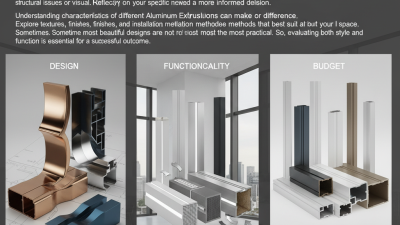
It’s important to evaluate not only strength but also the ease of fabrication. Complex designs might require specialized cuts, affecting both cost and time. Balancing design aesthetics with functionality is a critical aspect. Reflecting on your priorities can lead to a more tailored choice. Every project presents unique challenges, and understanding these elements is key for effective aluminum frame selection.
Key Factors Influencing the Selection of Aluminum Profiles
When selecting an aluminum frame section profile, various factors come into play. One critical aspect is the profile's strength-to-weight ratio. A recent industry report indicates that aluminum profiles can be up to 30% lighter than similar steel sections while offering comparable strength. This lightweight nature can lead to significant savings in transportation and installation costs.
Another important consideration is corrosion resistance. Aluminum naturally forms a protective oxide layer when exposed to air, making it inherently resistant to rust and environmental damage. According to research from the Aluminum Association, nearly 80% of aluminum ends up being recycled, showcasing its sustainability and long life. Buyers must weigh the initial costs against long-term benefits of durability.
It’s vital to consider load-bearing capacities. Different applications demand unique profiles. For instance, a framework for a large structure requires a different aluminum section than a smaller decorative piece. An understanding of these requirements can guide users to make the right choice. Selecting the wrong profile can lead to structural failures, costly repairs, and project delays. Each decision should take these factors into careful account for effective and reliable outcomes.
Analyzing Load-Bearing Capacities of Different Aluminum Sections
When analyzing load-bearing capacities of different aluminum sections, it’s crucial to understand material properties. Aluminum alloys vary significantly in strength and stiffness. Factors like wall thickness and profile shape play a major role. For instance, an I-beam profile typically offers improved load distribution compared to a hollow rectangular section.
Testing different profiles under actual load scenarios is essential. Consider how a profile performs under dynamic loads versus static loads. Sometimes, what looks strong on paper may not hold up in practice. Real-world conditions can reveal weaknesses, like buckling or excessive deflection. Evaluating load ratings from credible sources is necessary, but hands-on tests can provide deeper insights.
Designing with load-bearing capacities in mind requires attention to detail. Think about how joints and connections impact overall strength. It’s easy to overlook these smaller aspects, yet they can fundamentally alter performance. Evaluation isn't just a checklist; it’s an ongoing process. Adjustments may be needed after initial assessments, ensuring safety and reliability in the final application.
Importance of Thermal and Acoustic Insulation in Frame Selection
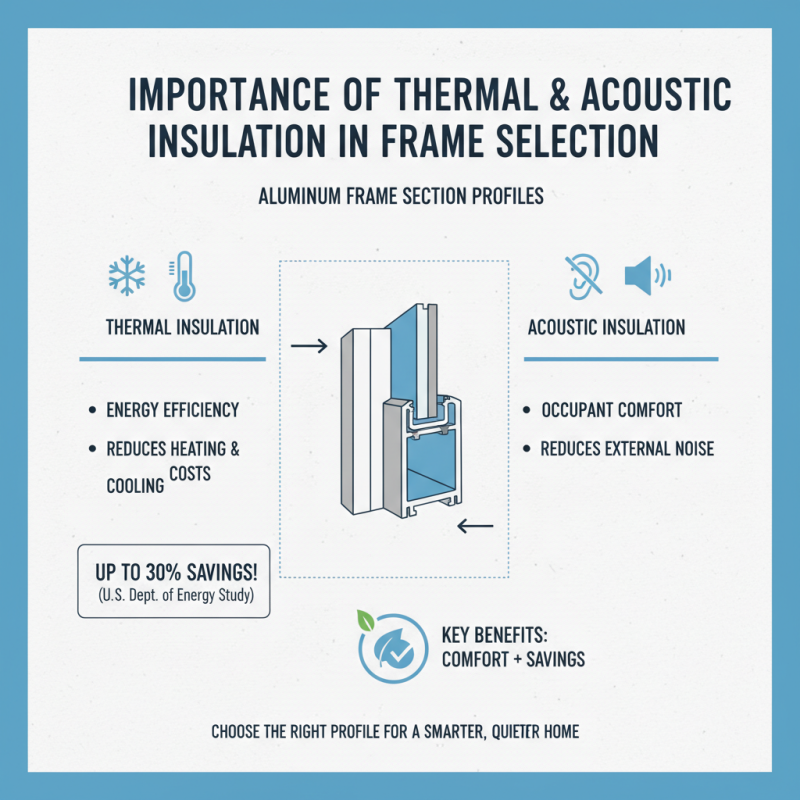
When selecting aluminum frame section profiles, thermal and acoustic insulation are essential factors. Effective insulation enhances energy efficiency and occupant comfort. A study by the U.S. Department of Energy highlights that improved insulation can reduce heating and cooling costs by up to 30%. This showcases the significance of choosing the right profile.
To ensure optimal insulation, consider frame thickness and material properties. For instance, profiles with thermal breaks minimize heat transfer. This can significantly improve a building's energy rating. Moreover, acoustic performance should not be overlooked. Aluminum frames can be designed to reduce sound transmission, creating quieter indoor environments. Research indicates that effective acoustic design can lower noise levels by about 10 dB, a noticeable difference for building occupants.
However, achieving the perfect balance between aesthetics and functionality remains a challenge. Some designs may prioritize style over insulation, potentially compromising energy efficiency. Therefore, careful consideration is necessary when choosing profiles. It is vital to analyze the specific needs of each project to make informed decisions that fulfill both thermal and acoustic requirements.
Cost-Effectiveness Considerations in Choosing Aluminum Profiles
When selecting aluminum frame section profiles, cost-effectiveness is a crucial consideration. Data from the International Aluminum Institute indicates that aluminum structures can offer up to 30% weight savings compared to steel equivalents. This reduction not only lowers material costs but also decreases logistics and handling expenses. Thus, fabricating lightweight frames can yield significant financial benefits over time.
Performance characteristics also play a significant role in overall cost-effectiveness. A report by the Aluminum Association highlights that properly designed aluminum profiles can enhance energy efficiency. Higher insulation properties lead to reduced energy consumption in buildings. However, these benefits can be countered by initial costs. Investing in higher-quality profiles may seem steep at first. Yet, if the durability and maintenance costs are considered, the long-term savings often justify the upfront investment.
Balancing these factors requires careful evaluation. Many buyers overlook hidden costs associated with lower-quality profiles. These can include increased maintenance and shorter lifespans. Ultimately, while the initial price tag is important, assessing the total lifecycle cost provides a clearer picture of value. Thoughtful selection is essential for a successful project outcome.
Top Tips for Choosing the Right Aluminum Frame Section Profile? - Cost-Effectiveness Considerations in Choosing Aluminum Profiles
| Profile Type |
Material Thickness (mm) |
Weight (kg/m) |
Cost per Meter ($) |
Typical Applications |
| Square Tube |
2.0 |
2.5 |
15.00 |
Frames, Racks |
| Rectangular Tube |
3.0 |
4.0 |
20.00 |
Supports, Structures |
| C-Channel |
2.5 |
3.0 |
18.00 |
Framework, Beams |
| Angle Profile |
5.0 |
6.5 |
17.50 |
Bracing, Framing |
| Round Tube |
2.5 |
2.2 |
14.00 |
Pipes, Handrails |