What is Aluminium Extrusion Angle Profile and Its Applications?
Aluminium Extrusion Angle Profile is a versatile and widely used product in various industries. This profile is created through the extrusion process, where aluminum is shaped under high pressure. The resulting angles have unique properties, making them suitable for structural and aesthetic applications.
These profiles are notable for their strength and lightweight nature. They can be found in construction, automotive, and even electronics. Many builders appreciate their corrosion resistance and ease of installation. Each application uncovers possibilities, yet challenges persist in specific contexts, such as weight tolerances or material fatigue.
The Aluminium Extrusion Angle Profile has many dimensions and specifications. This diversity allows for tailored solutions, but it also leads to potential miscalculations. Some industries may struggle to adapt to evolving standards and technologies. Reflecting on these challenges helps improve future applications and ensures optimal performance of aluminium profiles.
What is Aluminium Extrusion Angle Profile?
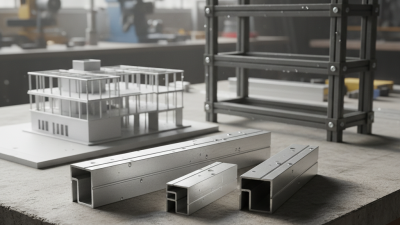
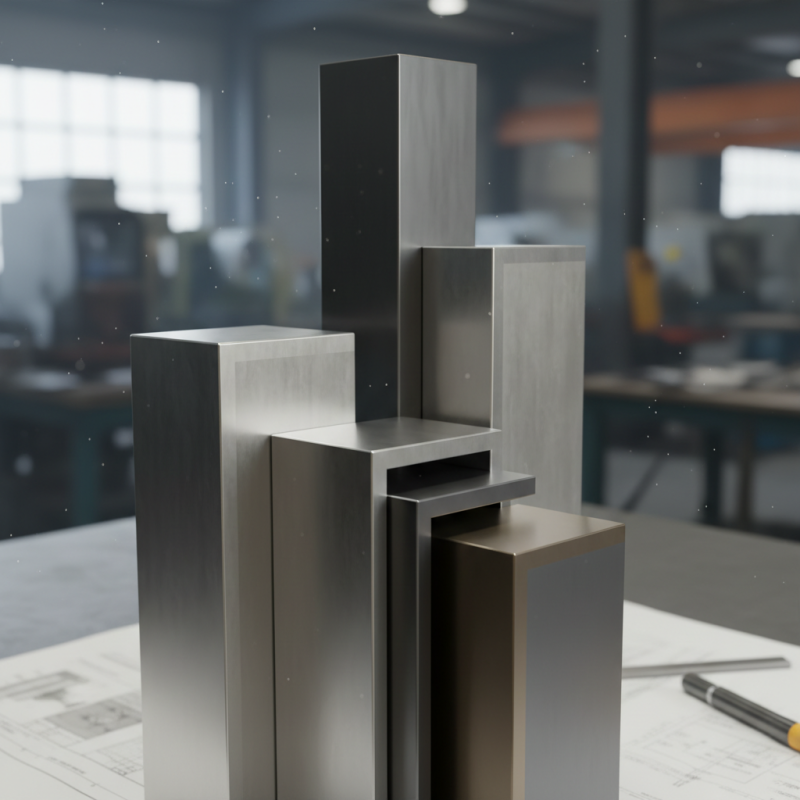
Aluminium extrusion angle profiles are versatile structural elements formed by pushing molten aluminium through a specific die. This process creates a range of shapes with a consistent cross-section. Angle profiles often have a 90-degree angle or other similar configurations. They are lightweight yet strong, making them ideal for various construction applications. These profiles can be found in building frames, machinery supports, and even furniture construction.
Applications for aluminium angle profiles are diverse. In construction, they provide support and stability to walls and roofing systems. Many industries utilize these profiles for electrical enclosures or equipment housings. Their corrosion resistance makes them suitable for outdoor use as well. Plus, they can be easily cut, drilled, or welded to meet specific project needs.
However, working with aluminium can present challenges. The strength-to-weight ratio, while beneficial, may lead to underestimating the needed support. Care must be taken in design to avoid failures in applications. Proper analysis and calculations are essential to ensure safety and reliability. Ignoring these details can result in structural issues down the line.
The Process of Aluminium Extrusion for Angle Profiles
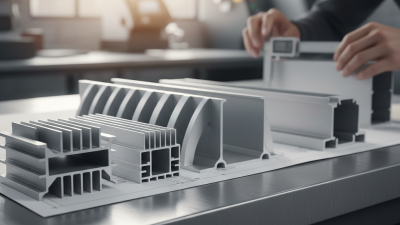
Aluminium extrusion for angle profiles is a fascinating process. It begins with heated metal billets. These billets, usually around 600 or 700 degrees Celsius, become malleable. A powerful press then forces the softened aluminium through a shaped die, creating the desired angle profile.
After extrusion, the profiles undergo cooling. They often get aged to enhance strength. This aging process can take hours or even days. Each step demands precision. If the temperature or pressure is off, the final product may not meet standards.
Tips: Always ensure proper alignment during extrusion. This prevents defects and wastage. Regular maintenance on equipment is key, as faults can arise without warning.
Applications of aluminium angle profiles are diverse. They’re used in construction for structural support. They also appear in furniture, automotive parts, and machinery. However, improper specifications can lead to project delays. Always double-check measurements and requirements before starting a project.
Key Properties and Characteristics of Aluminium Angle Profiles
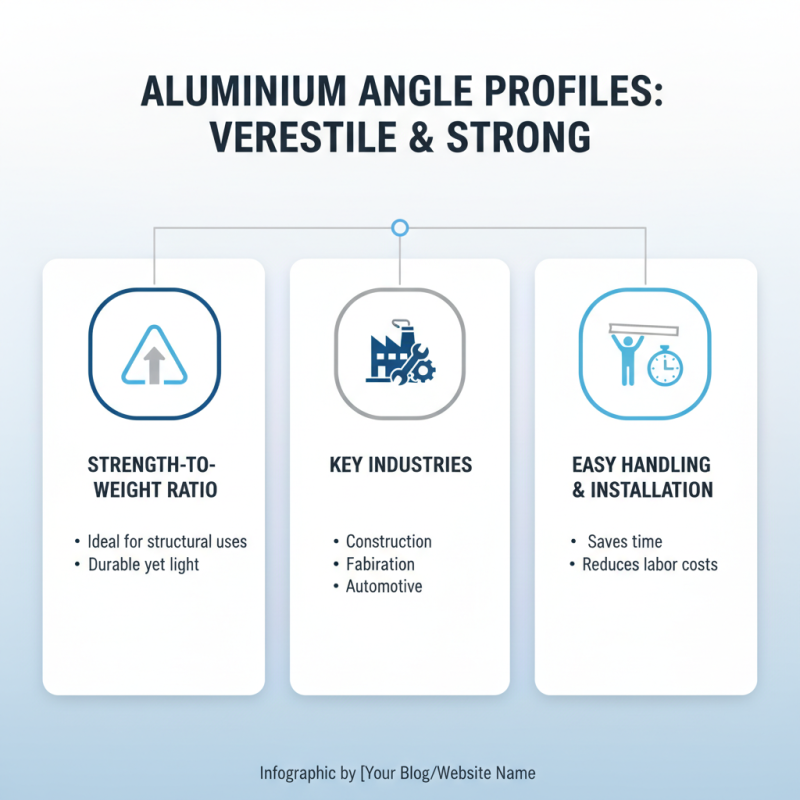
Aluminium angle profiles are versatile materials used in various industries. They are known for their excellent strength-to-weight ratio. This property makes them ideal for structural applications. The angles are often employed in construction, fabrication, and automotive sectors. Their lightweight nature allows for easy handling and installation, which can save time and labor costs.
One key characteristic of aluminium angle profiles is their resistance to corrosion. This ensures longevity, especially in outdoor environments. The profiles can be anodized or painted for even greater protection. Another significant property is their ability to be easily machined. Fabricators can cut, drill, or weld these angles without much difficulty, which is advantageous for custom projects.
However, working with aluminium is not without challenges. The material can be more expensive than alternatives. Additionally, careful planning is necessary to minimize waste during cutting. Designers must also consider load-bearing capacities. Miscalculations here can lead to safety issues. It's essential to reflect on these aspects to ensure that the final product meets the intended design and safety standards.
Common Applications of Aluminium Extrusion Angle Profiles
Aluminium extrusion angle profiles are versatile components used in various industries. Their unique shape offers excellent strength-to-weight ratios. Commonly, they serve as brackets, supports, or frames. These profiles are especially popular in construction and manufacturing. They provide structural integrity in projects requiring resilience.
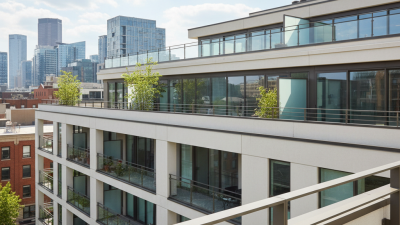
In the construction sector, angle profiles form the backbone of many structures. Builders often use them to create sturdy frameworks. Additionally, they are favorable in modular construction. The lightweight nature of aluminium makes transportation easier. However, some projects may require additional reinforcement, depending on load factors.
Manufacturers also rely on aluminium angle profiles for assembly fixtures. They provide adjustable and reusable framework solutions. In automotive designs, these profiles help in lightweight structures. Users must carefully consider design specifications for optimum use. Small miscalculations can lead to significant issues down the line.
What is Aluminium Extrusion Angle Profile and Its Applications? - Common Applications of Aluminium Extrusion Angle Profiles
| Application Area |
Description |
Benefits |
| Construction |
Used in framing and structural supports for buildings and bridges. |
Lightweight yet strong, promotes faster installation. |
| Furniture |
Applied in the manufacturing of tables, chairs, and shelving systems. |
Durable and aesthetically pleasing designs. |
| Automotive |
Utilized in vehicle frames, supports, and body panels. |
Improves fuel efficiency due to reduced weight. |
| Electronics |
Serves as cases and structural components for devices. |
Excellent heat dissipation and lightweight. |
| Railings and Fencing |
Used in the production of railings and fence systems. |
Corrosion-resistant and low maintenance. |
Advantages of Using Aluminium Angle Profiles in Various Industries
Aluminium angle profiles are widely used in numerous industries. They offer significant benefits.
Lightweight yet strong, they can support various structural needs. Their resistance to corrosion makes them ideal for outdoor applications.
In construction, these profiles frame windows, doors, and supports.
They also help create sturdy shelving units.
In the automotive sector, aluminium angle profiles are integral for vehicle frames.
They enhance strength without adding too much weight. This is crucial for improving fuel efficiency.
Moreover, their ease of fabrication allows for customization. This flexibility suits diverse design requirements. However, some industries may overlook their potential, missing out on cost-effective solutions.
In manufacturing, these profiles can be found in conveyor systems and fixtures. Their versatility enables different configurations.
They can be easily modified for specific tasks. Still, some projects may struggle with their installation.
Proper planning is needed to ensure efficiency. Despite this, the advantages of aluminium angle profiles continue to propel their popularity across various fields.